Book a call
30 minutes on Google Meet. A demo, pricing, moving over from BuddyBoss or another platform, or any question you have.
Prefer to write? Send us a message


Head of Content
More people are coaching than ever. The International Coaching Federation counted 122,974 coach practitioners worldwide in its 2025 Global Coaching Study, a record high.
That’s encouraging if you’re thinking about joining them. It also means you’ll need more than good intentions to stand out.
Most new coaches hit the same wall. They sign a few clients, fill their calendar, and then realize their income can’t grow past the number of hours in a week.
The good news is that you can plan around this from day one. In this guide, you’ll learn how to start a coaching business step by step: how to choose a niche, write a simple plan, price your offer, and find your first clients.
You’ll also see how to grow past 1:1 sessions once your calendar is full, and you’ll get a checklist to keep you on track.
A coaching business helps clients reach a specific goal through guidance and accountability. You might help a first-time manager lead a team, or a freelancer raise their rates.
What makes it a business, rather than a hobby, is that you have a clear offer, a defined audience, and a way to get paid. The industry is substantial. ICF estimates coaching generated $5.34 billion USD in revenue over the past year.
How you deliver your coaching shapes everything else, from pricing to the tools you need. Most coaching businesses use one or more of these models:
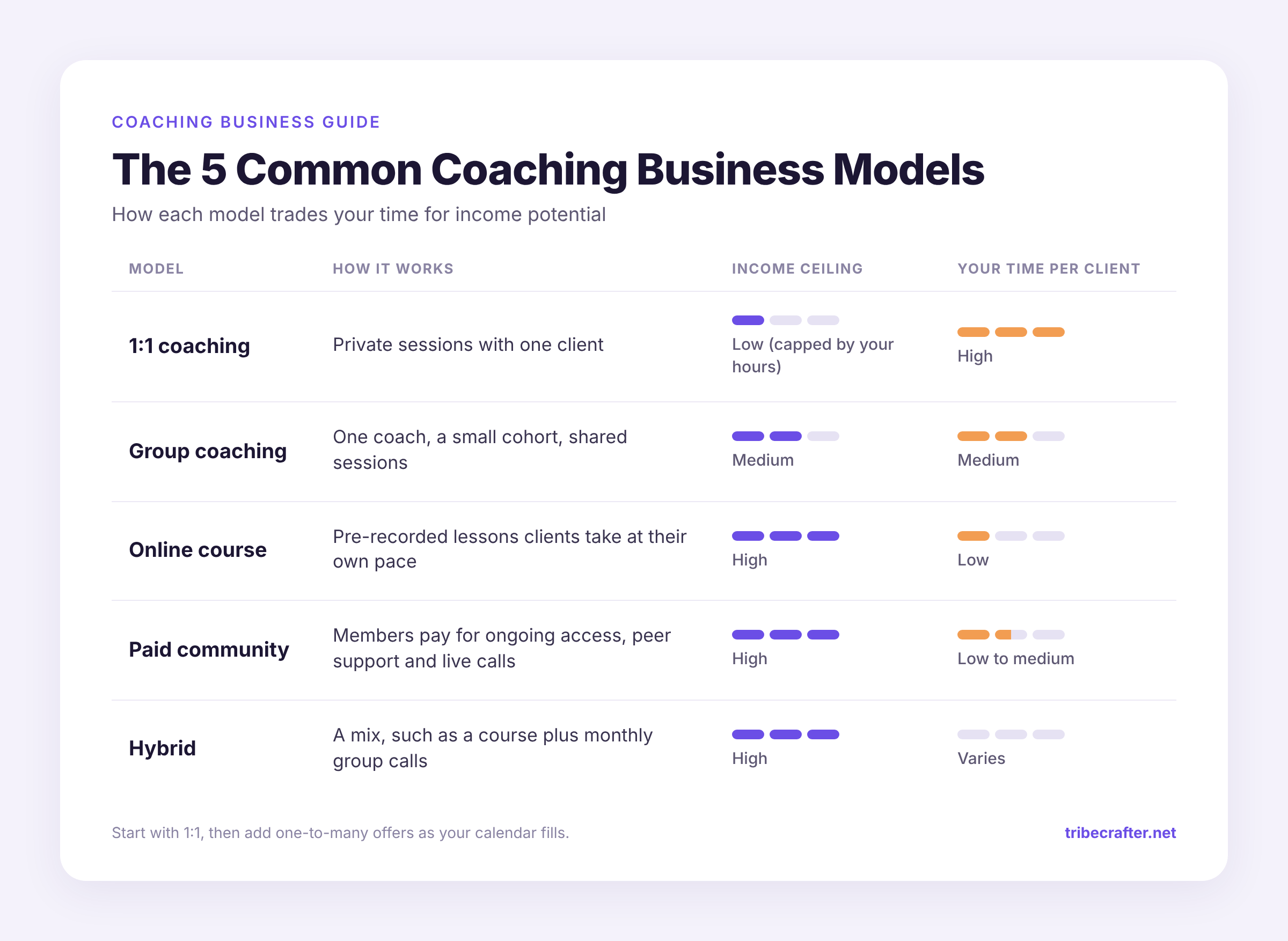
Start with 1:1 coaching. It sounds slow, but it’s the fastest way to learn what your clients actually struggle with.
Every session teaches you something. You’ll hear the same questions repeatedly, and you’ll notice which exercises get results. That knowledge becomes the foundation of a group program or course later.
Once you’ve worked with a handful of clients, you’ll know enough to package your method for more people at once.
In most places, no. Coaching is largely unregulated, so you can legally start without a certificate.
That said, credentials are becoming more important to buyers. In ICF’s 2025 research, 73% of coaches said clients increasingly expect credentials. Corporate clients, in particular, often ask about training before they hire.
A sensible approach is to start coaching while you build your credibility. Use your existing experience, collect testimonials, and consider a recognized certification once you’re sure coaching is the right path.
If you coach in a field like health or finance, check whether your area has rules about the advice you can give.
Here’s the step-by-step process. You don’t need to finish every step perfectly before moving on to the next one.
“Life coach” is too broad. A clear niche makes your marketing easier because people instantly know whether you’re for them.
Try this formula: I help [specific person] achieve [specific result]. For example, “I help first-time managers in tech run better one-on-ones” is far more compelling than “I help people grow.”
Pick a problem you understand deeply, ideally one you’ve solved yourself or helped others solve.
Before you design a logo or website, check that people will pay for help with your chosen problem.
Talk to 10 to 15 people in your target audience. Ask about their biggest frustrations, what they’ve already tried, and whether they’ve ever paid for help. Then offer a few discounted pilot sessions. If people book, you have a real business idea. If nobody bites, adjust your niche before you invest more time.
Using what you learned, decide how you’ll deliver your coaching at the start. For most new coaches, that means 1:1 sessions, with a plan to add a group or course offer later.
Write your future model down now, even if it’s six months away. It helps you collect the right material (common questions, frameworks, client wins) from your first sessions onward.
You don’t need a 40-page document. A one-page coaching business plan is enough to keep you focused.
The U.S. Small Business Administration describes a lean business plan format that works well for coaches. Answer these questions on a single page:
Review this plan every few months. It should change as you learn.
Choose a business structure. The SBA’s guide to choosing a business structure explains the main options, including sole proprietorships and limited liability companies (LLCs). Many solo coaches start as sole proprietors and form an LLC later for liability protection.
Next, open a separate bank account for business income. Write a simple coaching agreement that covers session length, cancellations, payment terms, and the fact that coaching isn’t therapy or medical advice. A local accountant or lawyer can confirm what applies where you live.
Sell packages, not single sessions. A three-month program with a clear outcome is easier to buy and better for results than open-ended hourly calls.
To set a starting price, work backward from your income goal. Decide how much you want to earn per month, how many clients you can realistically handle, and divide. Then compare that number with what similar coaches in your niche charge.
Expect to raise your prices as your testimonials and confidence grow.
At minimum, you’ll need a way to book calls, take payments, and run video sessions. Keep it simple at first.
You’ll also need a place for clients to find resources and stay connected between sessions. Many coaches start with a free social media group. It’s an easy start, but there are real drawbacks to running your coaching group on Facebook, including limited control over what members see.
If you plan to grow beyond 1:1 work, choose a home that can grow with you, one that can hold courses, paid groups, and live events in a single place.
Your first clients will almost always come from people who already know you. Tell your network what you’re doing and who you help. Be specific so people can refer the right contacts.
Beyond that, share useful content where your audience spends time. Answer questions in online communities, post short tips on LinkedIn or Instagram, and offer free 20-minute discovery calls. One clear call to action (“Book a free call”) works better than five.
Happy clients are your best marketing. Set clear goals at the start of each engagement and track progress together.
When a client reaches a milestone, ask for a short testimonial. Specific results (“I got promoted within four months”) are far more persuasive than general praise. With permission, these stories become the backbone of your website and sales conversations.
The steps above apply whether you coach in person or online. Starting an online coaching business mostly changes how you deliver and where you find clients.
Online, you can work with clients in other cities or countries, which makes a narrow niche much more viable.
It also changes the client experience. You’ll need reliable video software, a clear way to share materials, and a habit of following up in writing after each session. Clients can’t bump into you after a session, so your communication between calls matters more.
Group calls are one of the biggest advantages of coaching online. A single 60-minute call can support 10 or 20 people, and members learn from each other’s questions.
Keep group calls interactive. Coach one member live while others watch, or split people into small breakout discussions. These ideas for running engaging live sessions work just as well for coaching calls as for larger events. Record sessions so members who miss them can catch up.
At some point, your calendar fills up. That’s a great problem, but it’s still a problem, because your income stops growing when your hours run out.
ICF’s research shows most coaches expect future growth to come from more clients and more sessions rather than higher fees. One-to-many offers are how you serve more clients without working more hours.
A group program is usually the easiest next step. Take your 1:1 method and deliver it to a cohort of 6 to 12 people over a set number of weeks.
You charge each person less than your 1:1 rate, but you earn more per hour overall. Members also get something 1:1 clients don’t: peer support from people facing the same challenge.
Once your process is proven, record it. A course lets clients work through your framework at their own pace, while you focus on live support.
Many coaches pair a course with group calls, so members get structure and personal attention. If this model interests you, see how an online learning community combines lessons with ongoing discussion.
A paid community gives clients ongoing access to you, your resources, and each other for a recurring fee. It turns one-off programs into steady monthly revenue.
Communities also keep clients engaged after a program ends, which matters because recurring income depends on people staying. These member retention strategies can help you keep members active month after month. For more pricing ideas, explore these ways to monetize an online community.
This is where a platform like TribeCrafter helps. TribeCrafter is an all-in-one community platform that combines groups, courses, events, a blog, and monetization tools in a single product. You can run a paid private group for each cohort, host your course with video lessons and progress tracking, and set up live calls as events, with your video meeting link, RSVPs and automatic reminders. You can then sell access through one-time products or recurring subscription plans, with payments going to your own Stripe account. Your group program, course, and community all live in one place instead of across a handful of disconnected tools.
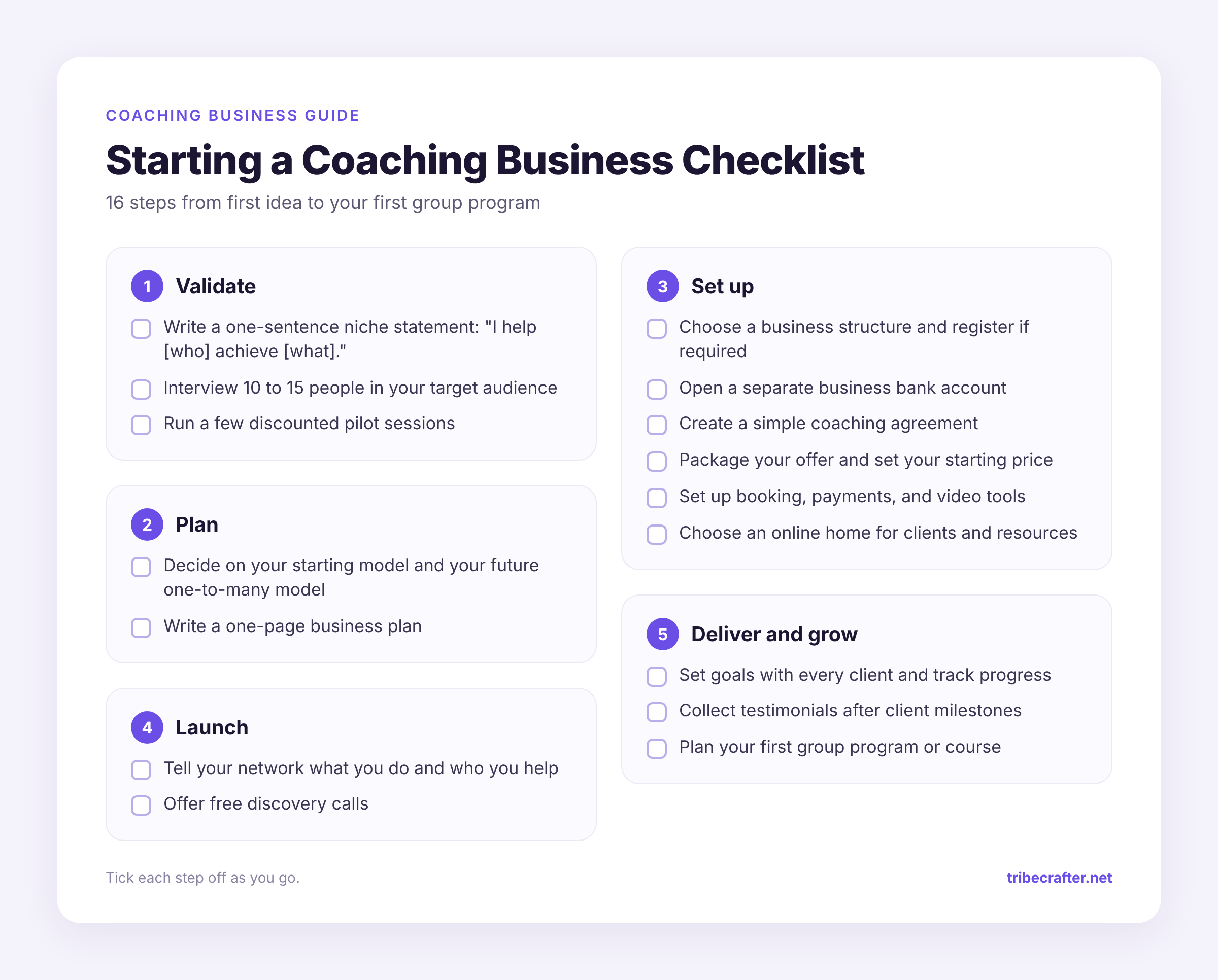
Use this checklist to track your progress:
If you’re for everyone, nobody feels you’re talking to them.
A beautiful website won’t help if nobody wants what you’re selling. Talk to potential clients first.
Low prices attract clients who aren’t committed and leave you burned out. Raise your rates as your results grow.
Scattered chats, files and links make your coaching feel disorganized. Give clients one clear place to go.
If your calendar has been full for months, it’s time to start planning a group offer.
Starting a coaching business is simpler than it looks. Pick a specific problem, prove people will pay to solve it, and deliver results that clients want to talk about.
The bigger challenge comes later, when your calendar is full and your income stops growing. Plan for that early. Collect the questions, frameworks, and wins from your 1:1 work so you can turn them into a group program, a course, or a paid community.
When you’re ready for that step, TribeCrafter gives you one place to run all of it. See how TribeCrafter works and start building the next stage of your coaching business.
You can start a coaching business with a modest budget. Many coaches begin with basic video software, a free or low-cost booking tool, and a simple website.
Your biggest optional costs are usually certification and marketing. Certification programs vary widely in price, so research a few before committing.
Start lean, then invest in better tools and training once paying clients cover the cost.
Not necessarily. Many solo coaches start as sole proprietors, which is the simplest structure.
An LLC can separate your personal assets from business liabilities, which some coaches prefer as they grow. The SBA’s business structure guide explains the trade-offs. Speak with an accountant or lawyer about what makes sense where you live.
Most new coaches should start with 1:1 coaching. It helps you understand your clients’ problems deeply and refine your method quickly.
Group coaching works best once you have a proven process and some testimonials. At that point, you know what works and can confidently deliver it to several people at once.
It depends on your niche, network, and how much time you can invest. Some coaches land their first paying client within weeks by reaching out to people they already know.
Building a full practice usually takes longer, often many months of consistent marketing and client work. Focus on getting your first few clients great results. Referrals and testimonials from those clients will speed up everything that follows.
Help shape TribeCrafter. Build and monetize your community, and tell us what you need next.
No credit card required
Get the best community growth
strategies delivered to your inbox.